Commercial Law
Introduction
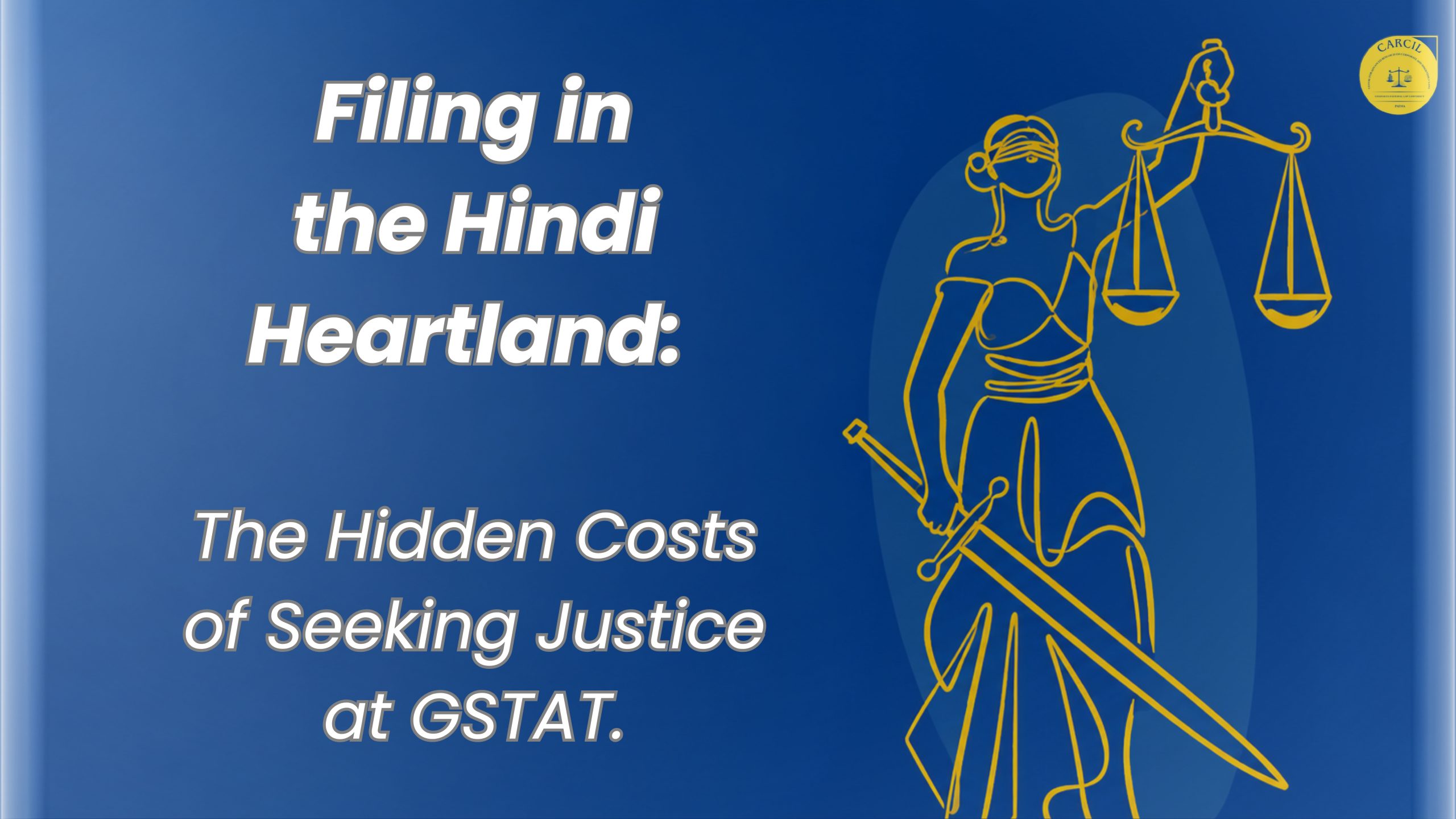
The operationalisation of the Goods and Services Tax Appellate Tribunal (GSTAT) is one of the reforms that many have been waiting for in the GST system. After over 7 years of functioning without an appellate forum solely for GST matters, the Tribunal has begun to receive appeals under the GSTAT (Procedure) Rules 2025. With countrywide benches being formed and the Registry now verifying all the submitted filings, a number of procedural questions have started to emerge and one of the questions that has generated considerable discussion is the language issue.
Many appellants from non-metro States for example Uttar Pradesh, Bihar, Madhya Pradesh, Rajasthan and the rest of the Hindi Heartland, have obtained their original adjudicating orders, appellate orders and notices in Hindi. When these taxpayers reach the GSTAT to file an appeal; they are required to prepare a certified English translation of the impugned order and submit it along with the appeal memorandum. This has given rise to a very unusual situation; the State Authority issues the order in Hindi exercising the State’s right under the Official Languages Act, 1963 and the appellant is now expected to incur the expense and time in translating the order before being able to seek justice through the Tribunal.
The GSTAT recently issued to a grievance petitioner a ruling that indicates that the GSTAT now has an official position on this issue – see F. No. GSTAT/CPGRAM/2025-26/136 dated 22nd April 2026. In this, we will explain how Rule 23(1) of the GSTAT (Procedure) Rules, 2025 is to be interpreted; what the GSTAT has stated in their response to the CPGRAM; the current state of the law; and what an appellant is required to do today.
What Does Rule 23(1) of the GSTAT (Procedure) Rules, 2025 Actually Say?
Rule 23(1) of the GSTAT (Procedure) Rules, 2025 outlines what form of documents to be filed with the Registry of the Tribunal. This rule states that any document submitted to the Tribunal (including the impugned order, any show-cause notice, any response, any written submissions, any annexure and any supporting document) that is not in English must be submitted with a certified English translation. Therefore, there is no exception under the Rule for orders that have been issued by the departmental authorities where the order has been issued in Hindi or in a regional language. Accordingly, it is the obligation of the appellant (the person who submits the appeal) to translate all documents submitted as part of the appeal regardless of whether or not the language barrier arose from the appellant or from the issuing authority.
During the initial filing process, the Registry of the Tribunal serves as an entry point to all documents filed in its offices. The Registry does not review the merits; its function is to verify all documents submitted comply with the procedure. Where an opposing party has issued an order in Hindi without a certified English version of that order, the Registry has the authority to classify the appeal as defective and assume the appellant has an additional period to correct the defect.
The issue that prompted the clarification
A complainant identified as Shri Asim Zafar (Varanasi, Uttar Pradesh) submitted his grievance through the CPGRAM portal (Grievance No. PMOPG/E/2026/0043871 dated March 16, 2026). The complainant’s rationale for filing was straightforward and reasonable: if the deciding authority produces an order in Hindi, then the appellant should not be responsible for obtaining and providing an English translation of that order. The deciding authority has generated the order; therefore, the appellant has not “generated” the barrier to the use of the order. Thus, the appellant’s statutory right of appeal should not be decided based on curing a defect that originated as a result of the action of the deciding authority.
The problem here is much more than one being an academic issue. The cost of having legally certified translations done ranges from ₹15 to ₹40 per word, and a typical order issued under either Section 73 or Section 74 of the CGST Act (2017) could consist of from 30 to 80 pages. Therefore, for a person who is a small taxpayer who contests a demand of between ₹5 and ₹10 lakh, the cost of translation alone serves as a significant hurdle or barrier to accessing the appellate remedy. In this case, the issue raised here is an access-to-justice issue, not a simple paperwork issue.
The Response of the Tribunal:
First, the rule is clear and unequivocally mandatory. The Tribunal has ruled that by the common meaning of Rule 23(1), any document that is not in English, including a departmental order in Hindi, must be accompanied by an official, certified English translation. In addition, the Tribunal has stated that it has no separate, independent authority to modify or limit this regulation because both the legislative and procedural framework is located with the Ministry of Finance (Department of Revenue). The Tribunal cannot penetrate executive rules made by the executive branch pursuant to delegated authority through judicial means.
Second, the rule is a set of normal procedure rules not punishments. The Tribunal has argued that Rule 23(1) is simply a typical aspect of the process of appeal to the various Courts in India. The party requesting a Statutory Appeal has the duty to present all documents in a proper and accurate manner so the Bench has no language barriers when it can begin its investigations. The reply also states that the imposition of this is not a “small punishment” on the Petitioner due to some error made by the Departmental Authorities, but rather the result of two separate processes occurring as one – original orders made pursuant to the statutory code by the Department, and the review of those original orders by the Appellate Authority.
Third, departmental orders in Hindi are protected by statute. The Tribunal has also stated that the issuance of Judgement on Original Orders or Judgement on Appeals in Hindi is governed by the Official Languages Act, 1963, specifically Section 3(3) and Rule 6 of the Official Languages Rule, 1976 which provides for the use of Hindi as one of the Official Languages of the Government of India in relation to specific aspects of Official Communication. Therefore, the Tribunal does not have the Jurisdiction to compel a Departmental Authority to issue an Order solely in English. In conclusion, the Tribunal is governed by two separate statutory processes in relation to the language of the Original Order and the language of the Appellate Filing, and accordingly has no legal authority to impose its own preferences in respect of the Departmental Authorities.
Fourth, and most important to current appellants, is that there is “transitional” leniency. In the Office Order dated January 20, 2026, and further directives issued on March 10, 2026, it is stated that for the first six months of this transition period, where Members of the Bench have an ability to read and understand Hindi, appeals filed with the Original Hindi orders and documents are to be accepted without requiring that these be immediately translated. This is a considerable administrative concession and great relief for appellants from Hindi-speaking states during the transitional period.
Fifth, the formation of a committee has been established to consider systemic rule changes. The formation of this Committee has been referenced in the Office Order No. 147/2025, dated September 8, 2025, as a result of the numerous representations that have been received in relation to the amendment of Rule 23(1), with respect to Hindi and all other vernacular languages. The mere establishment of such a committee suggests that there remains some degree of uncertainty regarding the situation, and it is expected that the resolution of this situation will be formalised through the established rule-making process.
Does the Rule State that Translation Is Required?
The legal way to answer this is yes — Rule 23(1) requires that translations be filed at the time of filing an appeal. Right now, however, there are ways in which the Tribunal is willing to accept Hindi-language orders from the appealer without requiring the appealer to file a translation at the time of appealing; for example, if the bench members can read and understand Hindi.
The two rules are not contradictory, while they don’t contradict to each other, they are just different in their application or in current practice. At this time, neither of the rules has changed; the Tribunal has merely chosen not to apply them strictly for a six-month period. After this six-month period, or if you are appearing in front of a bench that does not speak Hindi, your appeal will be governed by both rules.
So, if you choose not to file a translation today, then when you later are directed to do so by either the bench or the Registrar, you must be prepared to file one on very short notice.
Conclusion
The question of “Is translated copy required when I file my appeal with GSTAT?” has a bit of an answer. According to the strict application of the wording of Rule 23(1) under GSTAT (Procedure) Rules 2025, certified translations in English of all documents submitted in a non-English language must be done. CPGRAM response dated 22.04.2026 reaffirms this position and states that the tribunal does not have the power to change the requirement to provide an Arabic translation; it is only the parent Ministry who has that power. However, a six-month transitional grace will be provided to all Hindi appeals under the Office Order dated 20.01.2026 and instructions dated 10.03.2026 for all Benches that have Members who can read Hindi. Also, a committee under Office Order No. 147/2025 dated 08.09.2025 will be looking at making structural changes as part of this process.
The best course to take for an Appellant (especially if the Appellant lives outside the Hindi heartland) is to file the certified English translation of their appeal along with the appeal itself. Appellants from Hindi-speaking States still have the ability to get by due to the grace provided, but this grace is a privilege and not a right. Shri Asim Zafar has helped the GST community by seeking out an authoritative answer on a topic that will impact the thousands of small to mid-sized appellants throughout the country. The industry should keep a close eye on the recommendations of the language committee as they are released.

Thank you for sharing your feedback.
Our team will get back to you at the earliest